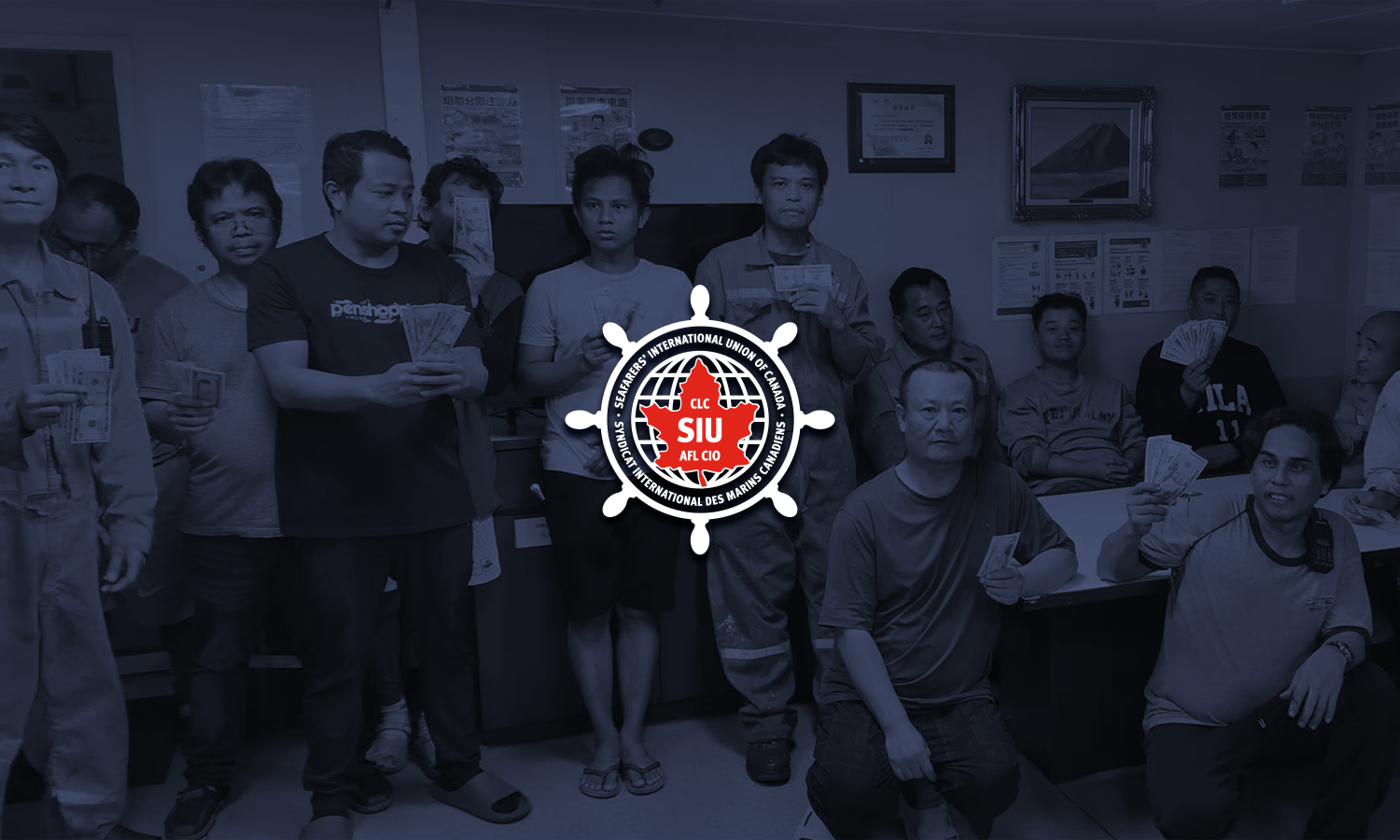
US$3 for a bottle of water. That’s what seafarers aboard the Panama-flagged Nord Lion were being charged when the ship called at Sorel, Quebec, in late October. Drinking water is a basic human need. When a ship is both your workplace and your home, the company operating it has a responsibility to make sure you can get safe drinking water without reaching into your own pocket.
The water charge was among several issues Kyle Campbell, SIU Canada’s Montreal-based inspector with the International Transport Workers’ Federation (ITF), encountered aboard the ship. The crew, which included Chinese and Filipino seafarers, raised concerns about the quality of the food. Campbell found unsigned employment contracts for the captain and some ratings. The crew had no shore leave during the ship’s four days in Sorel. Campbell secured a total of US$1,236 in back pay for the crew to cover their water charges.
Campbell has spent the past 3 years as the ITF’s Montreal-based inspector with the SIU Canada and is constantly reminded of how shipowners can mistreat seafarers. Kyle is part of a global network of ITF inspectors who visit ships in port, speak directly with crews, review contracts and wage records, and help seafarers recover unpaid wages or get assistance when they need it.
Why Canadian cabotage matters
Canada’s cabotage rules give Canadian vessels priority for domestic marine work. Bill C-39 would allow foreign vessels to carry out work in response to a declared emergency without a coasting trade licence, even when a suitable Canadian vessel is available.
The Nord Lion case reminds us of what’s at stake for the people doing that work. A company that charges its crew US$3 for a bottle of water is asking workers to bear the cost of meeting a basic need aboard its ship. SIU Canada is concerned that opening more domestic work to foreign-flagged ships, including vessels flying flags of convenience, gives companies that mistreat their crews more opportunities to operate in Canada. That puts Canadian maritime jobs at risk and makes it more likely that inspectors like Campbell will see more crews facing the same treatment.
SIU Canada is calling on Parliament to remove the proposed cabotage exemption from Bill C-39. Canada can strengthen its ability to respond to emergencies by investing in its own fleet and seafarers. The people doing that work deserve fair wages, decent conditions and free access to safe drinking water aboard the ships where they live and work. Foreign operators who mistreat their workers should not be given greater opportunities in the Canadian marine sector.
SIU Canada thanks Kyle for his continued work with the ITF to support seafarers in Canadian ports. For crews facing mistreatment aboard foreign-flagged ships, ITF inspectors are often among the few people they can turn to for help. Their work brings abuses to light and helps hold ship operators accountable for meeting maritime labour standards.